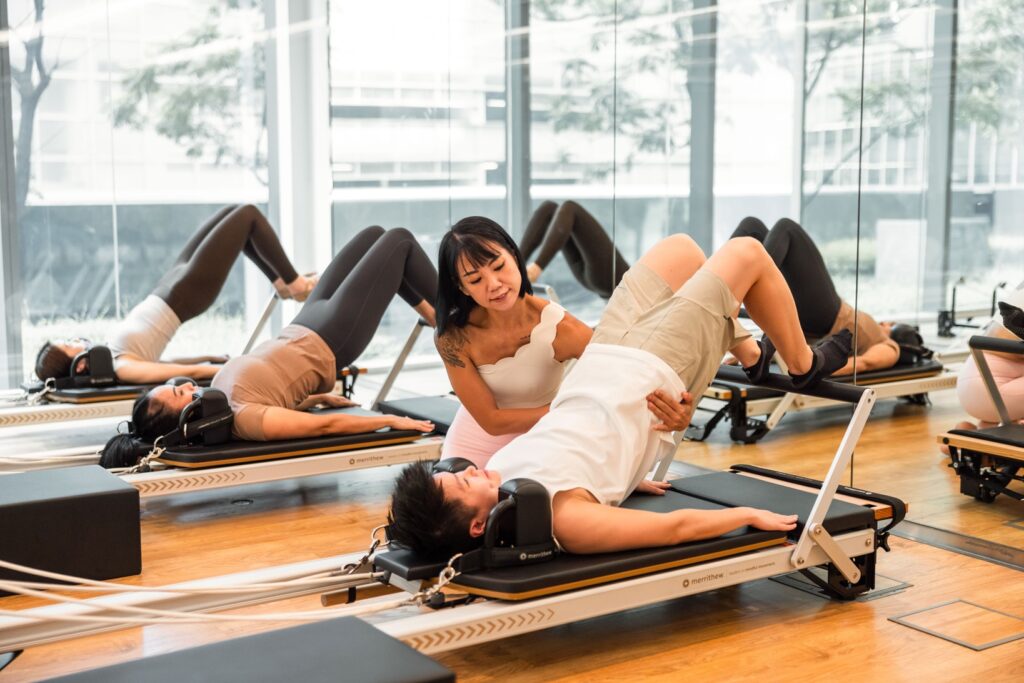
Desk work does not simply make the body “weak”. It asks adults to sustain low-level positions for hours while concentrating on screens, meetings and deadlines. By the end of the day, the back and shoulders may feel tired even though the person has done little obvious physical work.
Appropriately taught pilates singapore sessions can help desk-bound adults develop trunk endurance, breathing control and more confident movement. The aim is not to keep the abdomen braced all day. It is to improve the ability to create support when a task needs it and relax when it does not.
Core Endurance Is Not a Six-Pack Test
The core includes muscles around the trunk, pelvis, diaphragm and back. Their role changes with breathing, walking, reaching, lifting and balance. Visible abdominal definition does not reveal how well these muscles coordinate during everyday movement.
Endurance refers to sustaining suitable effort over time. For a desk-bound adult, this may mean maintaining control during repeated transitions or carrying a bag without excessive fatigue. Maximum-force bracing is not required for every task.
Sitting Still Requires Effort Too
Sitting is often described as physically passive, but the body still manages gravity and position. Muscles may work at low levels, while chair support carries part of the load. Remaining in one arrangement for a long time can become tiring regardless of whether it looks “correct”.
Pilates cannot make prolonged sitting consequence-free. It can increase movement options and capacity, while regular position changes and walking reduce the time spent in one posture.
Breathing and Trunk Support Work Together
The diaphragm contributes to breathing and pressure management within the trunk. Pilates frequently coordinates exhalation with effort, helping participants notice when they hold their breath or over-brace.
There is no need to pull the stomach inward as hard as possible. A useful strategy allows the ribs and abdomen to move while creating enough support for the exercise. People with respiratory conditions should follow appropriate medical guidance.
Neutral Spine Is a Reference, Not a Prison
Neutral alignment can be useful when learning load control, but the spine also needs to flex, extend, rotate and side bend. Holding one neutral position throughout every exercise would not prepare the body for normal life.
A well-planned class uses neutral as one option, then introduces controlled spinal movement. Range should reflect comfort, experience and the purpose of the exercise.
Start With Low-Load Coordination
Desk-bound adults may have strength but lack familiarity with deliberate trunk control. Supine breathing, heel slides and supported leg movements can introduce coordination without excessive load.
These exercises should not be dismissed because they look simple. Precision can make them demanding. Once the pattern is understood, resistance, lever length or complexity can increase gradually.
Pelvic Position Affects the Exercise
Small changes in pelvic position alter how the abdomen, hips and back share load. Pilates may explore a neutral pelvis, gentle imprint or controlled tilting depending on the movement.
No one position is automatically safest. The instructor should explain why it is being used. Participants benefit more from understanding the choice than from squeezing themselves into a visual template.
Endurance Develops Through Manageable Time Under Tension
Long holds are not the only way to improve endurance. Slow repetitions and repeated transitions can accumulate useful muscular work while allowing technique to reset.
The appropriate dose leaves the participant challenged but able to maintain breathing and control. Shaking can occur during effort, but loss of position or breath may indicate that the exercise needs to be reduced.
The Hips Must Contribute
When hip muscles fatigue or movement is unfamiliar, the lower back may take on more of the task. Bridges, side-lying leg work and controlled hip extension can improve how load is shared.
The objective is not to prevent the back from moving. It is to give the body several capable regions. Hip strength can support standing, stairs and lifting as well as Pilates exercises.
Shoulder Endurance Matters for Screen Workers
Keyboard and phone use hold the arms in front of the body, while many Pilates movements require arm support or controlled reaching. Shoulder-blade movement and upper-back endurance therefore deserve attention.
Wall work, modified planks and arm movements with light resistance can be scaled for wrist and shoulder tolerance. Pulling the shoulders permanently down and back is unnecessary because the shoulder blades must move with the arms.
Slow Tempo Exposes Compensation
Momentum can carry the body through a movement that is difficult to control. A slower tempo reveals where the ribs lift, the pelvis shifts or breathing stops.
This feedback is not evidence of failure. It identifies the point where the range, lever or resistance can be adjusted. Better control at a smaller range is often more useful than completing a larger movement quickly.
Desk Fatigue Requires More Than Floor Exercises
Most desk-related demands occur in sitting, standing and walking. A class that remains entirely on the floor may develop valuable skills, but those skills should eventually connect to upright movement.
Standing balance, squats, split stances and carrying patterns can help transfer trunk control into daily tasks. The exact progression depends on the format and participant.
Micro-Breaks Complement Pilates
One or two weekly sessions cannot replace movement across the workday. Short walks, standing meetings or a few comfortable reaches interrupt long periods of stillness.
These breaks do not need to reproduce a Pilates class. Their purpose is to change position and load. The class builds capacity, while daily movement reduces repetitive exposure.
Class Intensity Should Match Workload
A demanding session may feel refreshing after computer work, but it still creates training stress. Poor sleep, skipped meals and a high-pressure day can reduce recovery capacity.
On some evenings, a moderate class is appropriate. On others, a lower-load session may produce better movement quality. Consistency becomes easier when intensity can change without abandoning the routine.
Avoid Turning Core Work Into Constant Bracing
Some participants leave exercise programmes believing they must keep the abdomen tightened throughout the day. Constant bracing can make breathing and ordinary movement feel rigid.
Core control should be task-dependent. The body may create more tension while lifting and less while sitting comfortably or walking. The ability to vary effort is part of endurance.
Track Functional Changes
Progress may appear as smoother transitions from the floor, improved tolerance for carrying, or less fatigue during a long day. These outcomes can be more meaningful than holding a plank for an arbitrary duration.
Participants can also observe whether class exercises remain controlled as resistance increases. Quality, recovery and usefulness provide a fuller picture than repetition count alone.
Choose Teaching That Explains the Work
When considering Yoga Edition, desk-bound adults can review class level and ask how exercises are progressed or modified. Clear instruction should connect breathing, trunk control and movement rather than relying on slogans about “activating the core”.
An effective class gives participants options for wrists, backs and hips while keeping the exercise purpose understandable. Complexity should support learning, not hide it.
Build Support That Adapts to the Day
Core endurance is the ability to produce appropriate support repeatedly, not the ability to remain rigid. Pilates can develop this through breathing, controlled load, hip and shoulder work, and gradual progression.
For desk-bound adults, the best result is practical. The trunk feels more capable during movement, and sitting is interrupted often enough that no single posture has to carry the entire day.
Frequently Asked Questions
Can Pilates eliminate back fatigue from desk work?
It may improve strength and movement confidence, but workstation conditions, breaks, sleep and health also matter. Persistent symptoms need appropriate assessment.
How often should desk workers attend Pilates?
Two or three weekly sessions may suit many adults, depending on class intensity, other exercise and recovery.
Should I tighten my core while sitting?
Constant hard bracing is unnecessary. Use comfortable support, change position regularly and create more tension only when a task requires it.
Is shaking during Pilates normal?
Muscular shaking can occur with effort. Reduce the exercise if control, breathing or comfort deteriorates.
Does Pilates count as strength training?
It can provide meaningful strength and endurance work. Whether it meets all strength goals depends on resistance, progression and individual needs.
Can beginners with stiff backs join Pilates?
Many can use beginner-friendly variations, but severe, worsening or neurological symptoms should be assessed before exercise.